There’s a particular kind of Europe trip that’s almost impossible to plan well from a single search. The kind that crosses six destinations, three countries, and four weeks. The kind where the logistics, trains, transfers, hotels, the timing of one leg against another, quietly decide whether the trip becomes the one your family talks about for years, or the one you remember mostly for the airports.
We designed one of these for a member earlier this year. Twenty-four days through Germany and Italy in late September and early October: Frankfurt, Koblenz, Ravensburg, Munich, Florence, Tuscany, Calabria, Rome. The dates were set. The hotels were held. The itinerary was built, every leg ready to run before the family packed a bag.
Here’s the shape of it, because the design is interesting.
Here’s the shape of it, because the design is interesting.
Germany, by train.
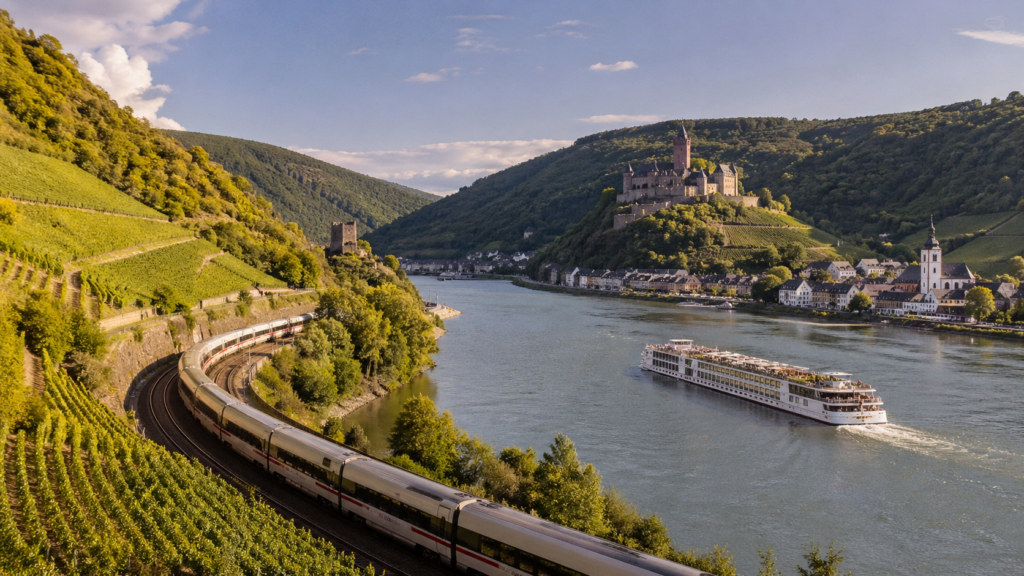
The first ten days moved slowly and by rail. Frankfurt arrival, then a 90-minute train to Koblenz on the Rhine for two nights at the Fährhaus Koblenz. Onward to Ravensburg, in southern Germany, for three nights at the Hotel Kaiserhof, close enough to the Bodensee for a day trip to Bingen if the weather held. Then south to Munich for three nights at the Platzl Hotel, with a private VIP tour of Neuschwanstein built in. Trains throughout. The pace was unhurried. The point was not to see everything; it was to actually see the places visited.
Italy, in three acts.
From Munich, a short flight to Florence for three nights at Hotel Lungarno on the Arno, including a pasta cooking class with unlimited wine, because some clichés are clichés for a reason. A private driver transferred the family to Tuscany for three nights at Borgo San Felice, the vineyard estate in Chianti. The structure of those days was deliberately loose: a wine tasting tour, a slow morning, dinner at the estate or in a nearby village. By Tuscany, the trip was running itself.
The detour south.
From Tuscany, a flight to Calabria for four nights at Hotel Rocca della Sena, the part of the itinerary least likely to appear in a generic Italian trip. Tropea by boat, dinners in town, and a day trip to Serra Pedace by private transfer, because there was a personal reason for our member to be there. This was the leg that turned a beautiful itinerary into a meaningful one.
Closing in Rome.
A flight to Rome for the final four nights at Six Senses Rome, the new property near the Trevi Fountain, opened in 2023, that has quickly become one of the most considered places to stay in the city. A guided tour day, a leisure day, a Rome food and wine tour, and then home.
What makes this Europe Trip work
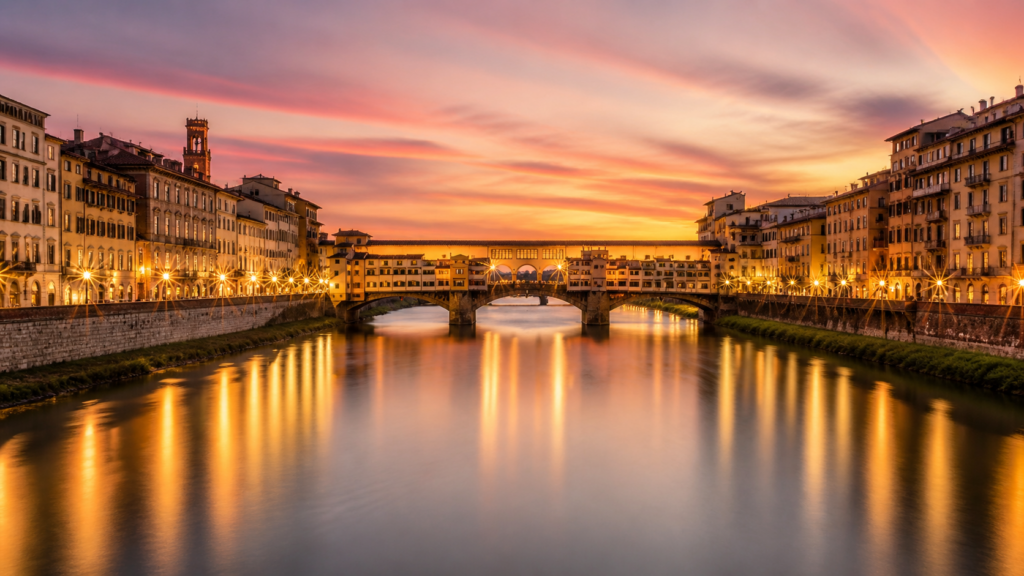
Sunset view of Florence in Europe with Ponte Vecchio over the Arno River and city lights reflecting on the water
A trip of this length, with this many transfers and this much variation in pace across Europe, falls apart in a hundred small ways without coordination. The morning train from Koblenz to Ravensburg connects with a tight window at the Frankfurt junction. The transfer from Florence to the vineyard estate has to be a private driver, not a taxi, because the estate’s entrance road is unmarked. The Calabria flight has limited daily departures and books up quickly in shoulder season. The Six Senses in Rome opened recently enough that booking the right room category requires a relationship, not a search.
None of that is dramatic individually. Collectively, it’s the difference between a trip that runs and a trip that doesn’t.
This is the kind of trip we plan months ahead, exactly because the bookings that matter, the Six Senses room category, the Borgo San Felice harvest-season window, the Munich-Neuschwanstein VIP timing, are sorted long before anyone packs a bag.
If a long European trip is something you’ve been thinking about for late 2026 or 2027, your concierge can begin the planning now. The earlier we begin, the better the trip gets.